
Learn

- Share:
-

-

-

-


Currency Outlook: Third Quarter 2025
By David Grimaldi, Foreign Exchange Sales Consultant
The first half of 2025 has been eventful to say the least. The Israel and U.S. conflict with Iran has caused a spike in oil, raising inflation fears once again. Bloomberg believes that any increase in oil prices would need to reach $130 per barrel to get the Consumer Price Index (CPI) above 3%. The medium CPI expectations into the year-end for economists is already at 3%, with some as high as 3.3%. Bloomberg’s modeling forecast finds that unlikely, with its forecasts topping out at 2.8%. Inflation has already moderated over the last four months despite all the drama around tariffs. The Federal Reserve’s Michelle Bowman, vice chair for supervision, broke ranks calling for a July rate cut of 25 basis points. Market Wizard Paul Tudor Jones thinks there will be three rate cuts in 2025 and the dollar will weaken by 10%.
There is some adjustment of the bond curve in the market, as we are seeing the pricing in of cuts around the time Federal Reserve Chair Jerome Powell’s term expires in 2026. The market expects U.S. President Donald Trump to appoint someone who will cut rates more aggressively; some are expecting United States Secretary of the Treasury Scott Bessent to move from his current role and take over for Powell. Trump came to a tariff agreement with China, and while a number of countries are still in negotiations, China seemed to have been the main target all along; Trump was able to extract another 30% in tariffs and agreements to buy more U.S. goods. Under the United States-Mexico-Canada Agreement (USMCA) agreement, Mexico and Canada cover 98% of trade, so only 2% is being negotiated. Shipping routes have normalized again, but Iran may threaten to close the Strait of Hormuz to oil container ships.
This would also impact Iran’s oil supply more than others and could be economic suicide.
EUR/USD
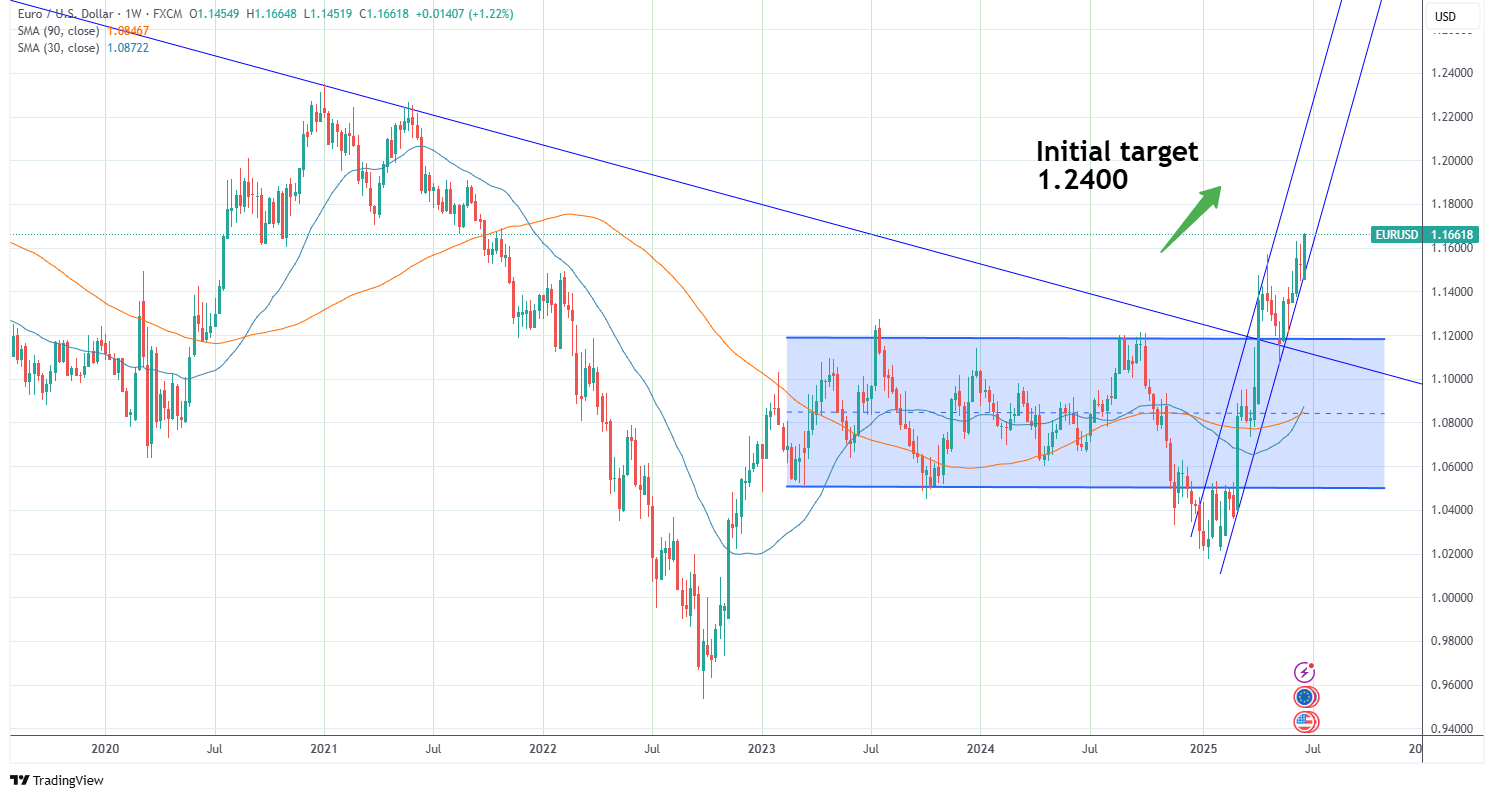
EUR has reached the highest levels since October of 2021, just before the Ukraine/Russia war. Russian President Vladimir Putin and Ukraine President Volodymyr Zelenskyy are no closer to a peace agreement despite their overtures, which has not slowed the Eurodollar’s strength. The expectation for U.S. rate cuts is beginning to increase into next year and is driving the dollar selling. Global conflict and uncertainties are normally U.S. dollar-buying opportunities, but U.S. Treasury yields remain elevated since Moody's downgraded the U.S. credit rating in May. The dollar has maintained an offered tone. Gross Domestic Product (GDP) in the Eurozone continues to slump after a 25 basis point cut in June by the European Central Bank (ECB), which brings the total to eight cuts in the latest rate cycle. ECB president Christine LaGarde believes that growth has been impacted by U.S. tariffs, but Europe should be near the end of the rate cuts. EUR/USD could move aggressively higher toward 1.2300 and could reach as high as 1.2800. Support is now at 1.1200, which would need to be broken to see a trend reversal.
GBP/USD
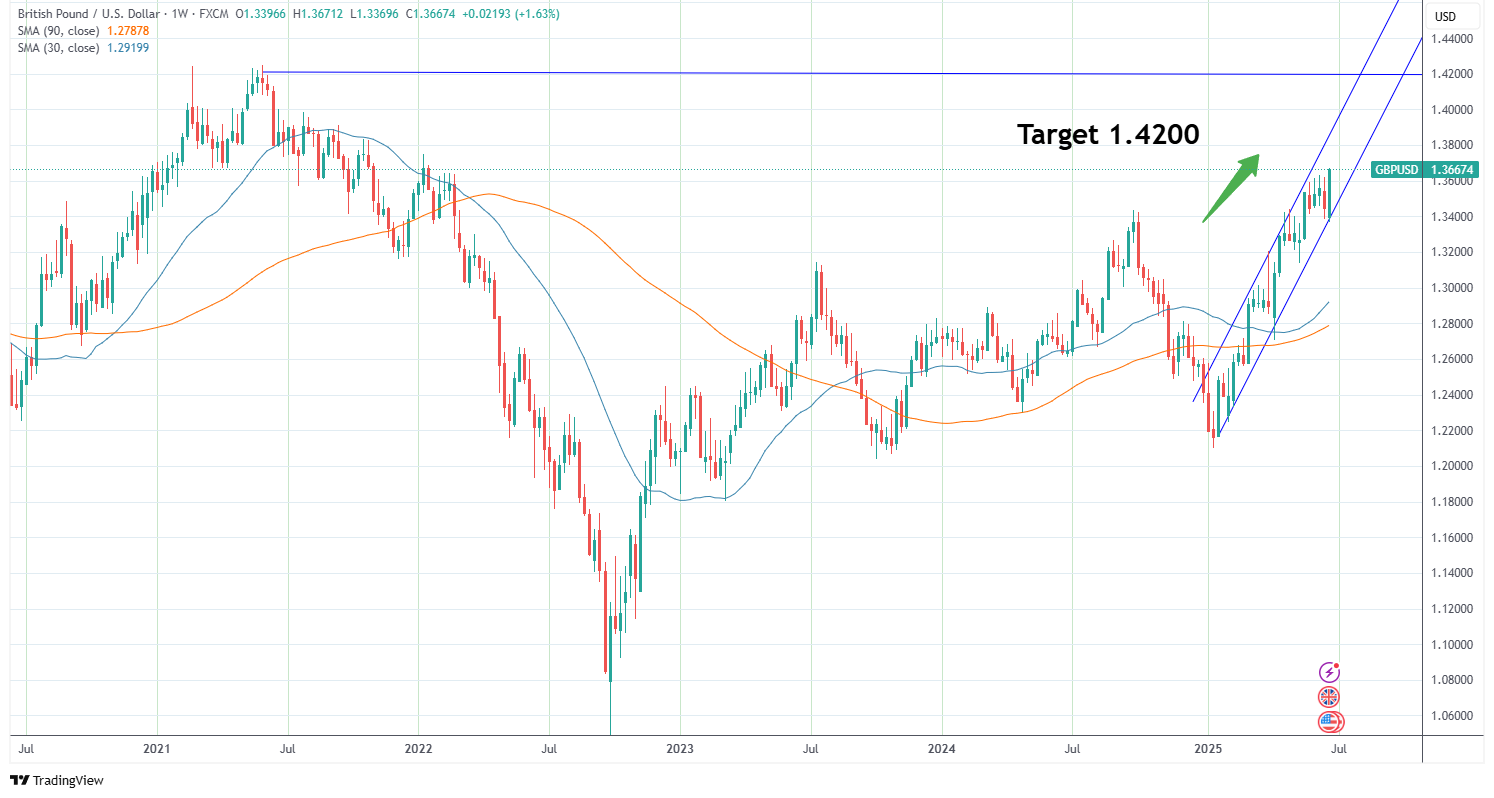
Inflation in the United Kingdom is elevated at 3.5% compared to 1.9% in the Eurozone, which is the cost of doing cross border business since Brexit. Debt is 100% of GDP, and 30-year Gilts are now at the highest levels since 1998, as there has been a steepening of the yield curve due to the higher cost of financing debt. The sterling pound, like the euro, is at the highest levels since the Ukraine-Russia war began and looks like it could touch post-COVID high despite high debt levels. Trump and UK Prime Minister Keir Starmer signed a tariff deal for 10% on UK exports, down from the 25% additional levy. They failed to come to terms with steel and aluminum, which is currently at 25%.
USD/JPY
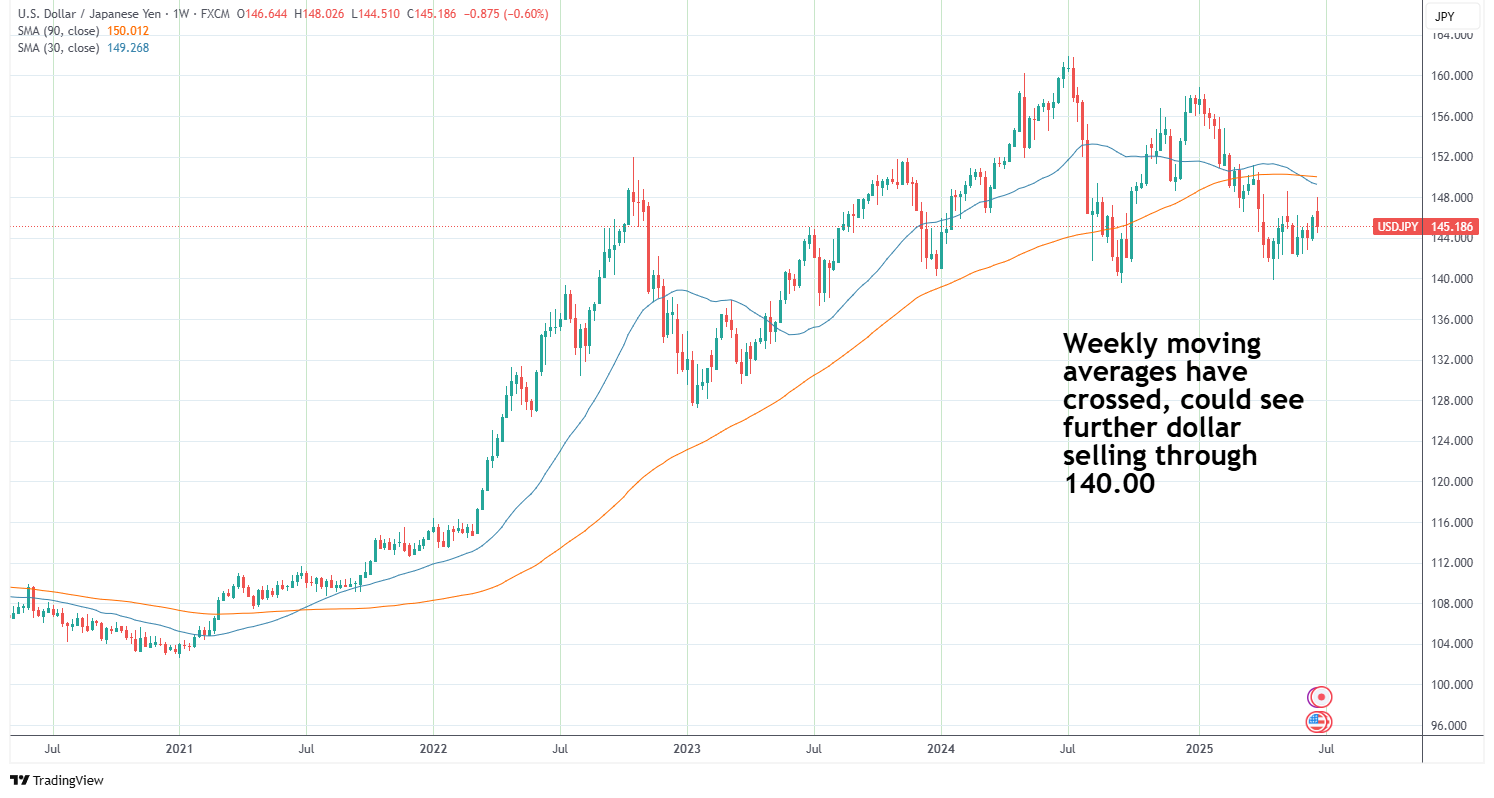
There is optimism that in relation to inflation price stability will be achieved earlier than expected. Japan experienced inflation after most G7 countries. The Bank of Japan (BoJ) focus remains on tariffs from the U.S. to impact inflation medium term. Manufacturing is 20% of Japan’s economy, so tariffs may slow the economy unless Trump and Japan can make a deal. Supply issues are behind a recent spike in food prices, especially rice. The BoJ has remained on hold and cautious on rates. The yen traded between 140-150 in April and since then has been in a narrower range. The dollar has not weakened versus the yen like other currencies, mostly because U.S. bond yields remain elevated.
USD/CAD
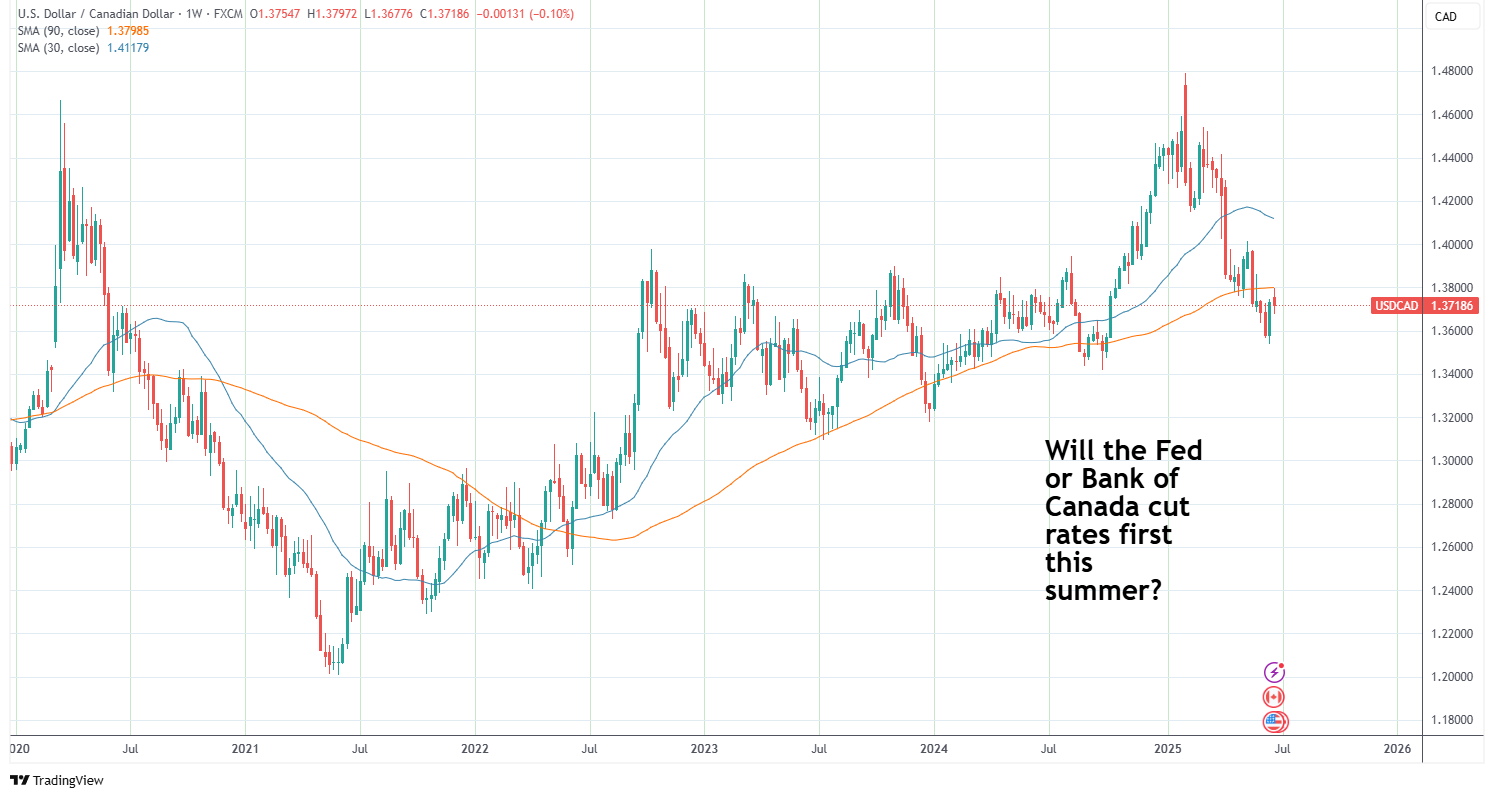
The expensive housing sector is cooling a bit in Canada. Energy prices showed signs of dropping just before the conflict with Iran. The Bank of Canada held rates steady in June and may not cut in July after an inflation report that did not convincingly show prices coming lower. Higher oil prices are good for the Canadian economy and the CAD dollar as it is their biggest export. The U.S. dollar did weaken to the lowest levels since October 2024. The Canadian Senate barred the government from negotiating away dairy protectionism in future trade agreements. Trump is set on tariffs in any trade deal, and it may take a few stages to settle long-term USMCA issues.
Important disclosure information
Asset allocation and diversifications do not ensure against loss. This content is general in nature and does not constitute legal, tax, accounting, financial or investment advice. You are encouraged to consult with competent legal, tax, accounting, financial or investment professionals based on your specific circumstances. We do not make any warranties as to accuracy or completeness of this information, do not endorse any third-party companies, products, or services described here, and take no liability for your use of this information.