
Learn

- Share:
-

-

-

-


Eliminating the Penny: What It Means to Your Business
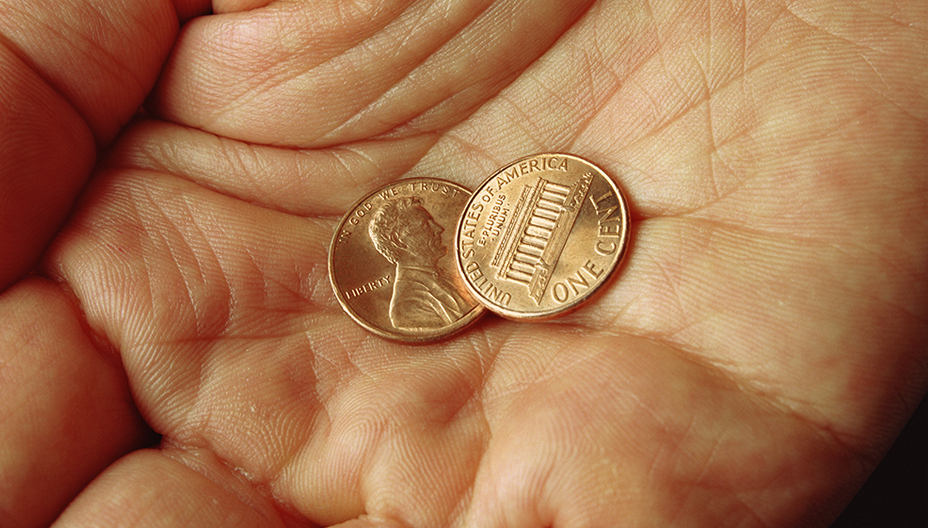
With the decision to abolish pennies, the U.S. Treasury Department announced a historic shift in American currency.1 This marks the end of over two centuries of penny minting. The move is driven by the simple economic reality that pennies cost nearly four cents to produce but have minimal purchasing power in today's economy.
For small companies across the nation, this transition presents both operational opportunities and challenges. While the penny remains legal tender indefinitely, its gradual disappearance from circulation will reshape cash transactions.
Why are pennies being discontinued?
The reasons to eliminate the penny center on cost savings for taxpayers and improved economic efficiency.
- Production costs
It’s now economically unsustainable to produce the penny. Production costs have consistently exceeded face value since 2006. Each one-cent coin costs approximately 3.7 cents to manufacture, according to the U.S. Mint 2024 annual report, creating a loss of $85.3 million.2
- Declining usage
According to the Federal Reserve, cash transactions represent 14% of all payments in the United States, with digital transactions dominating the marketplace.3 However, even in cash transactions, pennies aren’t commonly used.
- International precedent
Canada eliminated its one-cent coin in 2013 and Australia, New Zealand and several European nations followed suit. These countries report smoother commerce, reduced cash handling costs and minimal consumer impact as a result.4
The official penny elimination plan requires coordinated efforts across federal monetary institutions.
The U.S. Mint produced its final batch of pennies on November 12, 2025, marking the end of a minting tradition that began in 1793. Following this cessation, existing pennies will continue circulating until they naturally exit the system through normal banking processes.5 The Mint estimates that this gradual phase-out will take 10 to 15 years, although pennies will remain legal tender indefinitely.
Once the supply of current pennies is depleted, the Federal Reserve will cease distributing new pennies to financial institutions. Banks will continue accepting penny deposits but won't provide new penny supplies to commercial customers.
Rep. John Rose acknowledged that eliminating the penny could increase demand for nickels, which currently cost about 14 cents to produce.6 Treasury Secretary Scott Bessent believes the current administration can change the composition of the coins to break even on nickel production.7 The Treasury is exploring alternative alloy combinations that would maintain the nickel's distinctive characteristics while using less expensive materials.
The transition timeline enables companies and consumers to adapt gradually. Financial institutions are preparing support programs to assist commercial customers through the change, while retail associations are developing industry-wide best practices for the new cash handling protocols.
What is the consumer impact of eliminating the penny?
Many companies are expected to round to the nearest five cents to simplify cash handling for consumers and staff. For example, purchases ending in $0.01 or $0.02 round down to $0.00, while those ending in $0.03 or $0.04 round up to $0.05.
Electronic payments remain unaffected by these changes. Credit cards, debit cards, mobile payments and online transactions will continue processing to the exact cent.
There are concerns that consumers will pay more for this rounding, which is commonly referred to as a "rounding tax." Past reports have mixed conclusions on whether rounding benefits or harms consumers. However, a study published in July 2025 by Zhu Wang, vice president for research in financial and payment systems, and Senior Economist Russell Wong of the Richmond Federal Reserve, stated that when transaction amounts favor values that round up consumers consistently end up paying more.8
Abolishing the penny could result in benefits and challenges for your small business.
Small companies will experience both immediate operational changes and long-term strategic opportunities as pennies gradually exit circulation. The transition affects every aspect of cash handling. Understanding these impacts allows companies to maximize benefits and minimize disruption during the adjustment period.
The advantages of eliminating the penny create operational efficiencies.
Eliminating the penny may provide several advantages for businesses.
- Efficiency
Cash handling will be faster when there’s no longer a need to count pennies. Register reconciliation time will also drop, which frees up staff to focus on customer service rather than coin management.
- Simplified cash management
It's easier and quicker to count cash drawers and prepare bank deposits without having to roll pennies.
- Reduced costs
Small companies can reduce coin handling fees, drawer requirements and maintenance with the transition away from pennies.
Managing disruptions when eliminating the penny requires planning.
Getting rid of the penny could result in disruptions if companies don't approach the transition strategically.
- Implementation costs
Enterprises may require one-time point-of-sale (POS) system updates, staff training programs and additional customer education during the transition period.
- Pricing strategy
Companies using psychological pricing points, such as $9.99, must decide whether to maintain these prices for electronic payments while rounding for cash or adjust their pricing structures entirely.9
- Coin inventory issues
Businesses may experience cash flow challenges if there's a shortage of nickels during the first transition year.
Financial institutions offer services to help minimize business impact.
Digital payment migration services help companies reduce cash dependency through POS systems, mobile payment integration and contactless transaction capabilities. These technologies minimize the potential impact of abolishing the penny on daily business operations.
Banks also provide specialized coin inventory management, ensuring adequate supplies of nickels and dimes during peak transition periods. Automated ordering systems prevent coin shortages while optimizing denomination mixes based on transaction patterns. In addition, many institutions offer temporary coin storage solutions for companies experiencing unusual volume fluctuations.
Cash flow optimization services help manage the financial impact of the transition. Treasury management solutions streamline payment processing, accelerate deposit availability and reduce cash handling expenses.
Synovus can provide essential support during penny elimination.
Eliminating the penny is a manageable shift that offers opportunities for operational improvement and modernization. Small businesses that are proactive will navigate the change smoothly while reducing costs and improving customer service.
Synovus can help. In addition to cash flow services, we provide comprehensive business banking services like lines of credit, digital banking and deposit services to help your company thrive in a penny-free economy. We also offer expert resources to guide you through this transition.
For assistance, contact a Synovus Business Banker, call 1-888-SYNOVUS (1-888-796-6887) or stop by one of our local branches.
Important disclosure information
This content is general in nature and does not constitute legal, tax, accounting, financial or investment advice. You are encouraged to consult with competent legal, tax, accounting, financial or investment professionals based on your specific circumstances. We do not make any warranties as to accuracy or completeness of this information, do not endorse any third-party companies, products, or services described here, and take no liability for your use of this information. Diversification does not ensure against loss.
- NPR, “The U.S. Just Produced Its Last Penny After a More than 200-year Run,” November 12, 2025 Back
- U.S. Mint, “2024 Annual Report, December 9, 2024 Back
- Federal Reserve Financial Services, “2025 Diary of Consumer Payment Choice,” Back
- Brittanica, “U.S. Penny,” November 13, 2025 Back
- U.S. Mint, “United States Mint Hosts Historic Ceremonial Strike for Final Production of the Circulating One-Cent Coin,” November 12, 2025 Back
- BBC, “US Ends Penny-making Run After More than 230 Years,” November 12, 2025 Back
- NPR, “The U.S. Just Produced Its Last Penny After a More than 200-year Run,” November 12, 2025 Back
- Richmond Federal Reserve, “Rounding Up: The Impact of Phasing Out the Penny,” July 11, 2025 Back
- Reuters, “US Retailers Left Short-Changed as Penny Production Ends,” November 1, 2025 Back
Do you have questions or ideas?
Share your thoughts about this article or suggest a topic for a new one