Recruitment and Retention Strategies for the 2026 Labor Market

Corporate executives in the U.S. are worried about the nation’s unstable economy. Thirty-five percent believe a recession could happen.1 As these business leaders seek to balance growth with profits, the labor market is yet another area of increasing concern.
In February 2026, there were 7.6 million job openings and an unemployment rate of 4.4% in February 2026.2 Despite millions of open roles, unemployment is again rising after a brief drop in January 2026. The numbers aren’t adding up. Why?
Factors like slowing job growth, changing demographics, burnout and employees choosing to remain in their current positions further contribute to hiring challenges.
Which industries are most affected by the labor shortage?
Almost every vertical in the U.S. labor market is affected by worker shortages. However, some are at higher risk than others. According to the U.S. Chamber of Commerce, shortages are disproportionately affecting healthcare, manufacturing, construction and retail.3 Financial and professional services, as well as the government sector are also seeing shortages in available workers.
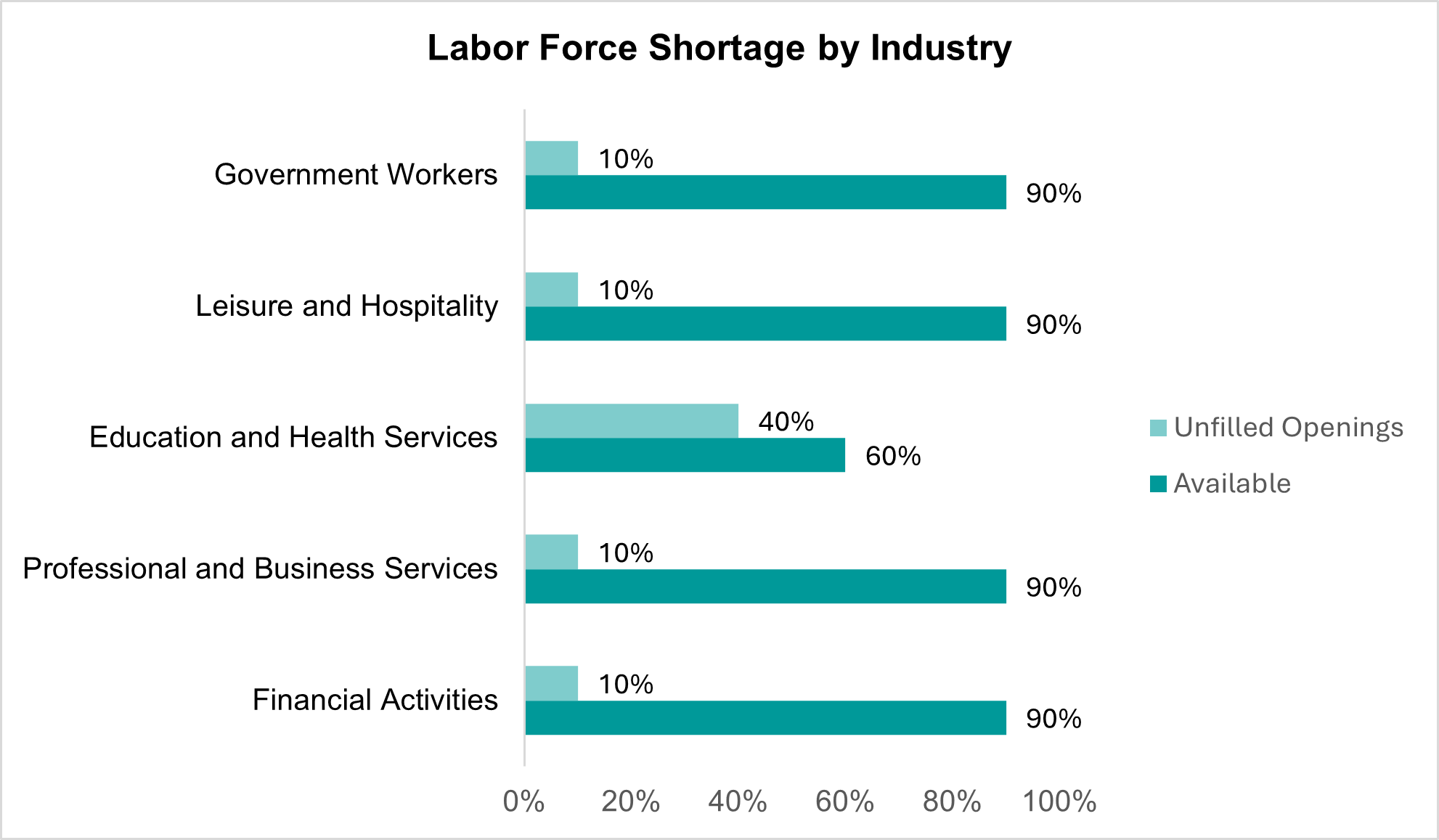
Researchers may not agree on why the labor shortage persists or which industries are most at risk. However, one thing is clear: There are more open positions than candidates available to fill them.
Skills gaps are a primary concern for corporations and recruiters seeking workers.
The mismatch between available roles and the necessary skills is a primary concern for employers and potential candidates. Sixty-two percent of hiring managers responding to a Robert Half survey said skills gaps are more pronounced than last year.4 Similarly, 66% of recruiters say they can’t find qualified candidates.5
What skills are in high demand?
The technology sector is driven by rapid innovation and the ongoing need for advanced digital solutions across industries. It remains a hot market and technology and data skills are in highest demand in 2026. These include:
- Proficiency in artificial intelligence and machine learning as companies integrate advanced automation and intelligent systems into their operations.
- Cybersecurity expertise, which enables organizations to protect sensitive data and ensure compliance with stricter regulations.
- Cloud computing skills, especially familiarity with multi-cloud environments and serverless architectures, that help businesses transition to scalable and flexible infrastructure solutions.
- Software development knowledge — particularly in languages like Python, JavaScript and Go — which is critical for creating sophisticated applications and digital platforms.
- Data analytics and data science, essential for extracting actionable insights from large datasets to support decision making and business growth.
- Skills in blockchain technology, Internet of Things (IoT) and edge computing, which are increasingly important as these technologies become more integrated into everyday processes.
- Digital marketing as corporations seek strategic growth through e-commerce, social media and mobile applications, as well as return on investment.
Adaptability, continuous learning and the ability to collaborate across disciplines enhances the value of technical professionals amid constant industry advances.
In addition to technology-focused expertise, employers are seeking strong communication, problem-solving and project management skills. Critical thinking and adaptability are also vital so professionals can respond efficiently to changing business needs and work effectively in cross-functional teams. Leadership and emotional intelligence help drive collaboration and innovation.
Job seekers feel new roles are hard to obtain.
Almost 40% of job seekers feel opportunities for work are lacking.6 The current job market is extremely competitive. And while corporate job openings attract literally hundreds of applications, AI filters reject many before they ever reach human recruiters.
In such a challenging job market, a single job description often combines responsibilities that would typically require more than one worker. It’s no wonder 80% of available workers say they feel unprepared for the current job market.7
According to a ZipRecruiter survey, the primary reason job seekers don’t feel prepared is lack of experience (39%). Respondents also believe education and training are insufficient (26%). Conversely, almost 20% think they are overqualified for available positions.
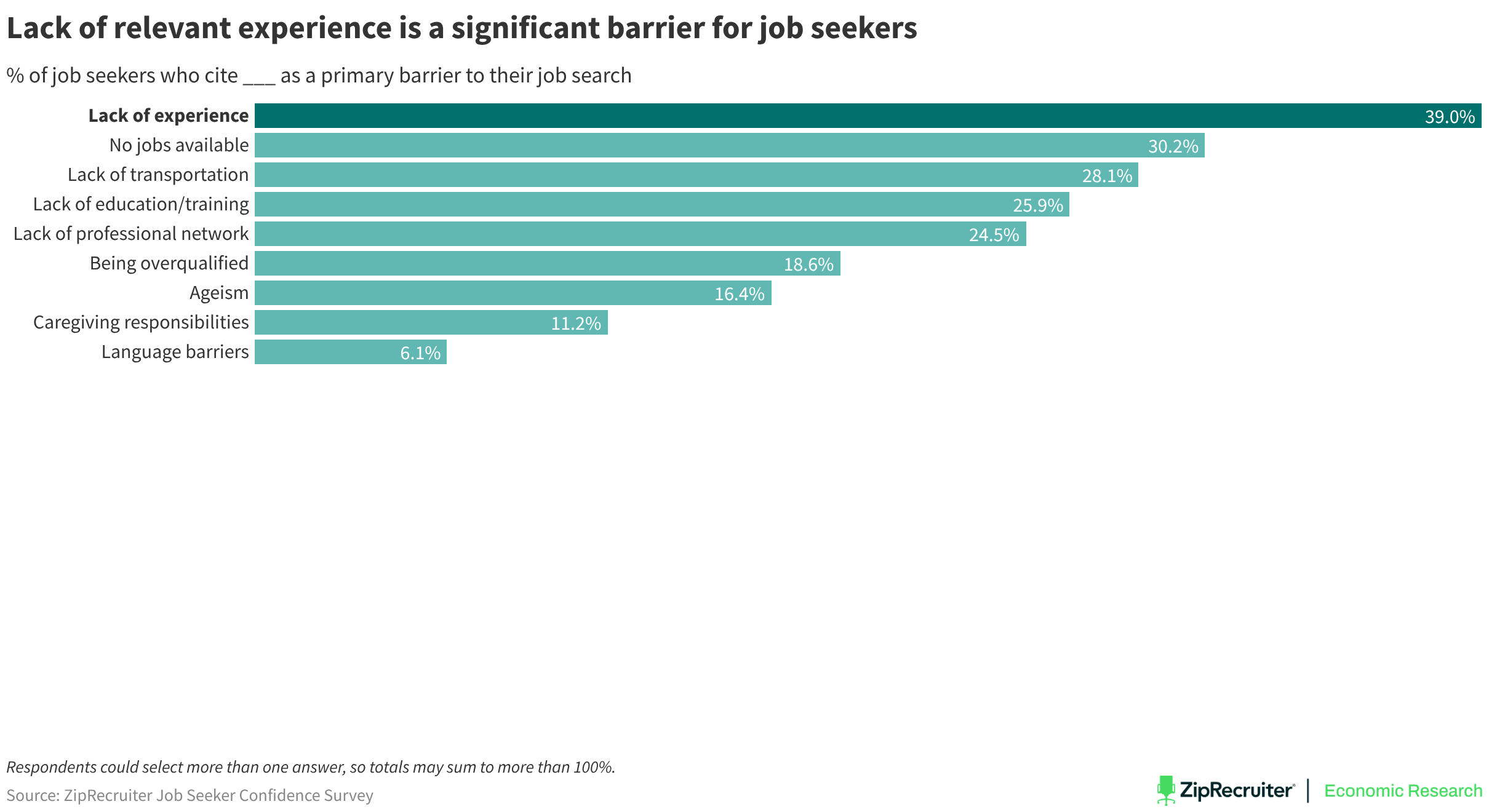
Lack of experience presents challenges to new graduates as well as workers who want to switch to new industries or careers. Even corporations looking to fill entry-level positions often prefer at least one year of experience.
Employees want enhanced benefits, advancement, better pay and work-life balance.
A successful hire is contingent on employers’ and candidates’ ability to agree on mutual objectives. Both parties agree there is a skills gap but 92% of organizations plan to move forward with hiring, while 38% of employees responding to a Robert Half survey plan to look for a new job this year.8, 9
Beyond positions that better suit their skills, job seekers have identified three critical requirements they’d like the next employer to meet.
- Better benefits
Financial stress and shifting workplace expectations are increasing the desire for better benefits. In fact, improved benefits (36%) ranked even higher than compensation among the professionals who intend to look for new jobs this year.10
Improved health insurance plans, flexible work arrangements, paid time off and mental health resources are among the perks job seekers desire. Additionally, there is increasing demand for retirement plans, financial planning support and deferred compensation options. These benefits help workers feel more secure about their financial futures and address concerns about cost of living and long-term stability.
- Opportunities for advancement
Thirty-four percent of workers feel opportunities for advancement are limited at their companies.11 This lack of upward mobility can discourage employees, prompting them to seek new roles elsewhere. As a result, employers who fail to provide clear pathways for career growth risk losing valuable talent to competitors.
- Higher compensation
Inflation is increasing the cost of food, housing, fuel and utilities and consumers don’t feel their salaries are keeping pace with increased living costs. Compensation is a top consideration for 33% of job seekers who want to align wages with financial needs.12
- Work/life balance
Corporations are trying to do more with leaner teams and tighter budgets. Current employees are taking on more duties. Job descriptions for open roles often combine responsibilities that previously were split across multiple workers which intensifies workloads. Twenty-four percent of job seekers said they are burned out.13 Not only are they asking for higher pay to justify broader scope, but they are also prioritizing flexibility and workplace practices that maintain balance.
Organizations that know how to improve employee retention can build resilient teams that are engaged and more likely to remain loyal, contributing to long-term success and stability.
Close skills, financial and work-life balance gaps for successful recruitment and retention programs.
Corporations are struggling to hire and retain qualified candidates in an increasingly competitive labor market. Job seekers, as well as existing employees, are prioritizing benefits, compensation and work/life balance which challenges employers to meet these demands while also providing clear pathways for advancement and supportive work environments.
This struggle not only impacts productivity but also increases turnover rates as employees seek opportunities that better align with their personal and professional goals. Job seekers also evaluate job descriptions and corporate culture before applying for advertised roles.
Closing skills, compensation and work/life gaps will help attract the right candidates and improve employee retention.
- Implement skills-based hiring and specialized training.
Corporate and external recruiters are using skills gap analysis, a method that weighs competency more heavily than education and experience, to evaluate how well candidates will meet the requirements of the role. For example, a potential employee with strong data and analytic skills would be considered even without a computer or information technology degree.
Skills-based hiring also accelerates the recruitment process, effectively addressing applicants’ concerns about whether their skills match a specific role. To increase employee engagement, companies now offer training tailored to skills and employee interests as part of learning and development. Encouraging an “always-learning” work environment not only addresses skills gaps but also demonstrates an organization’s willingness to invest in its employees.
- Offer fair compensation and benefits.
To attract high-quality candidates and mitigate employee churn, employer salaries should be commensurate with skills and experience. Job seekers are also asking that companies disclose salaries in job postings or early in the interview process so both parties can determine if the roles match expectations for compensation.
Retirement, wealth and financial planning and deferred compensation are attractive benefits as more employees and top earners prepare for their financial futures. Enhanced benefits packages are a means for employers to differentiate themselves and attract high-quality candidates in a competitive market.
- Help employees balance busy schedules.
A stressed employee won’t be a productive one. Access to comprehensive, affordable health insurance within early days of employment is standard at most companies. Wellness and mental health programs are also effective in helping employees manage work and life challenges.
Flexibility is highly desirable among job seekers and employees. At 61%, the hybrid work schedule is preferred followed by remote (33%), while only 6% want to work onsite.14 Employees believe hybrid arrangements will improve work-life balance (76%), enable them to be more efficient (64%) and productive (52%) in their work, and reduce burnout (61%).15 Offering flexible work arrangements is beneficial to organizations as well as their employees.
Attract and retain highly skilled talent in a competitive market.
Competition for talented employees is stiff. However, companies with talent acquisition and employee retention programs that include competitive benefits and salaries, as well as flexible working arrangements will win.
Synovus can help your organization stay informed of employee preferences and trends, as well as develop compensation and benefits packages that are attractive to high-quality candidates.
Strategic Advice
Ensuring Sustainable Leadership for State and Local Government
Strategic Advice
Lessons in Leadership: Under Pressure? Control What You Can
Strategic Advice
Top 2025 Business and Investment Trends
-
Interest Rate News: Third Quarter 2026
Fed rates held steady in Q2 as inflation remained elevated. See what market volatility and term borrowing trends could mean for borrowers in Q3 2026.
-
Interest Rate News: Second Quarter 2026
Get Q2 2026 FOMC rate updates, forecasts and market insights. Also see how interest rate changes impact loans, mortgages, and business growth strategies.
Important disclosure information
This content is general in nature and does not constitute legal, tax, accounting, financial or investment advice. You are encouraged to consult with competent legal, tax, accounting, financial or investment professionals based on your specific circumstances. We do not make any warranties as to accuracy or completeness of this information, do not endorse any third-party companies, products, or services described here, and take no liability for your use of this information.
- Bureau of Labor Statistics, U.S. Department of Labor, “The Unemployment Situation — February 2026,” March 6, 2026 Back
- Ibid Back
- U.S. Chamber of Commerce, “Understanding America’s Labor Shortage: The Most Impacted Industries,” February 202, 2026 Back
- Robert Half, “Only 6% of Organizations Have the Talent They Need to Complete Priority Projects,” February 9, 2026 Back
- LinkedIn, “LinkedIn Research: Nearly 80% of People Feel Unprepared to Find a Job in 2026, as Two-Thirds of Recruiters Say It’s Harder to Find Quality Talent,” January 7, 2026 Back
- ZipRecruiter, “ZipRecruiter Job Seeker Confidence Survey,” Q1 2026 Back
- LinkedIn, “LinkedIn Research: Nearly 80% of People Feel Unprepared to Find a Job in 2026, as Two-Thirds of Recruiters Say It’s Harder to Find Quality Talent,” January 7, 2026 Back
- HR Dive, “Employers Plan to Hire ‘Aggressively’ in 2026 — But Only for Certain Roles,” January 12, 2026 Back
- Robert Half, “Survey: Nearly 4 in 10 Professionals Plan to Search for a New Job in 2026,” December 11,2025 Back
- Ibid Back
- Ibid Back
- Ibid Back
- Ibid Back
- Gallup, “Indicators: Hybrid Work,” 2026 Back
- Ibid Back