Learn

- Share:
-

-

-

-


How to Build and Maintain a Secure Website

A website can boost the profile and positive perception of your company, whether your business is carpentry or legal services. But cyberattacks are increasing. Small businesses are targets of 15% of website hacks.1 This might seem like a small percentage. However, 43% of global cyberattacks are against small enterprises.2
Damages from website hacking can include defacement, compromised customer data, website outages and denial of service.
As threats evolve, website security is essential to protect your customers, employees, reputation and profits.
What is a secure website?
Before you can set up and maintain a secure website, it’s important to understand what the term "secure" means in this context. A secure website is one that effectively protects sensitive data both when “at rest” (stored) and when it is transmitted (“in transit”) between customers and companies. Encryption technologies scramble the data into code that requires a key to unlock.
A lock icon in the address bar and “https” (indicating hypertext transfer protocol) in the URL will verify the legitimacy of your site. A secure site will get a boost in search engine rankings — a bonus.3 However, HTTPS only indicates a baseline level of cybersecurity.
Your site should feature additional website security controls to help further safeguard customer information and business operations, as well as increase trustworthiness. For example, a news site may only need a simple password to verify users. But retailers and other businesses that process financial transactions and sensitive data should secure customers' credit card data through multifactor authentication (MFA).
MFA requires a minimum of two types of identification. These include something known, like passwords and usernames, along with codes, tokens, biometrics or authentication log ins as secondary verification factors.
Choose a secure hosting provider to build a trustworthy website.
Small business owners don’t have to be website security experts. A trusted partner with a good cybersecurity track record is invaluable. Finding a hosting company with a strong focus on preventing cyberattacks is critical to creating a secure website. Use trusted hosting providers and ask them to share their own website security strategy.
Some business owners also rely on their hosting company for web design templates that the owner can modify without coding knowledge. Others may bring their own skills to the project or hire outside web developers. Whatever the case, the host should provide strong website security. Even if you use a 'do-it-yourself' provider to set up your own site, interview the company first to understand their security offerings.
Name recognition can go a long way. Look for brands you know and trust that have a well-established reputation for creating secure websites. Check for third-party security certifications like System and Organization Controls 2 (SOC 2), which can also help you recognize a reputable host or developer.
Even if you plan to use templates, a website developer can provide information about the security features you need. Consider partnering with developers based in the U.S. who have passed security screenings and accumulated a good track record to reduce risks. General-purpose freelancer sites that display provider reviews can also be a reliable source of IT talent, including web developers and designers.
Address emerging AI threats.
Ensure your site is designed to withstand the emerging wave of AI-powered cyber threats. For example, fraudsters are using Gen AI-generated deepfake emails, messages and videos to impersonate customers and employees and request valuable information. Equip your website with secure contact forms, including CAPTCHA or reCAPTCHA tools, to block deceptive bots and use MFA checks before processing any sensitive requests.
AI can also help hackers find weaknesses in outdated software, so prioritize web design that accommodates regular updates. Only use third-party plugins from sources with security practices you trust.
Keep your website secure.
Once your site is up and running, you’ll need to ensure it stays secure. Your web hosting provider should regularly install updates and security patches for the plugins and other systems your site uses. Ask any providers you are considering whether they automatically apply patches.
It’s also important to perform regular cybersecurity checks on your site to identify and address vulnerabilities. While many providers offer website security checks and scanning tools, stick with cybersecurity tools that are well-known and trusted, updated often and have transparent privacy policies.
Apply zero-trust principles.
"Zero trust" means never trusting a device to access sensitive areas of a website without verification, even if the device is in your network or has accessed those areas before. This approach to website security requires strong, unique logins with MFA to verify every user's identity each time they seek access to sensitive information on the site. Segment administrative functions so users only see what they're authorized to access and regularly update these permissions.
Develop an incident response plan.
You should have a damage control and recovery plan in case your company falls prey to a cyberattack. The plan should include containment, assessment, notification, reporting and recovery.
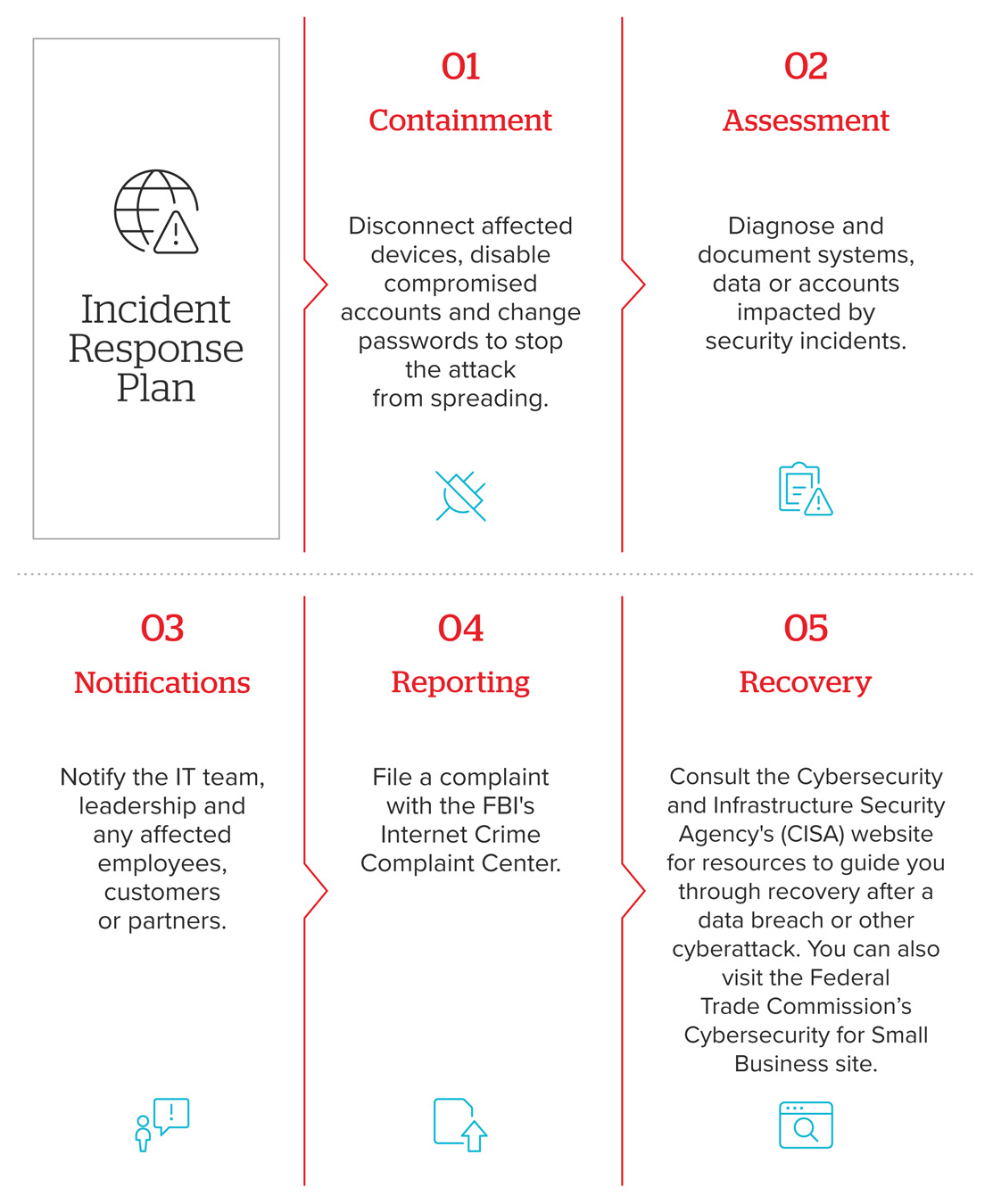
An incident response plan helps minimize downtime and financial loss in the event of a cyberattack. An effective plan also ensures rapid recovery and clear communication with employees and customers which protects your company’s reputation.
Collaborate with a partner that prioritizes website security.
Building a secure website for your business is vital. If you don’t have the resources to do it yourself, choose a trusted partner that can help. Synovus offers solutions that efficiently process and secure your business’ financial transactions, as well as safeguard data and customers. For more details on website security, contact a Synovus Business Banker, call 1-888-SYNOVUS (1-888-796-6887) or stop by one of our local branches.
Important disclosure information
This content is general in nature and does not constitute legal, tax, accounting, financial or investment advice. You are encouraged to consult with competent legal, tax, accounting, financial or investment professionals based on your specific circumstances. We do not make any warranties as to the accuracy or completeness of this information, do not endorse any third-party companies, products, or services described here, and take no liability for your use of this information.
- SQ Magazine, “Small Business Cybersecurity Statistics 2025: Threats, Costs & Solutions,” October 6, 2025 Back
- Mastercard, “Too Small to Be Ignored? Not Anymore. Why Shoring up Cyber Defenses for Small Businesses is Crucial,” March 27, 2025 Back
- American Marketing Association, “What is SEO Marketing? A Comprehensive Overview,” March 11, 2025 Back
Do you have questions or ideas?
Share your thoughts about this article or suggest a topic for a new one