
Learn

- Share:
-

-

-

-


7 Tips To Get Your Home Ready For Winter
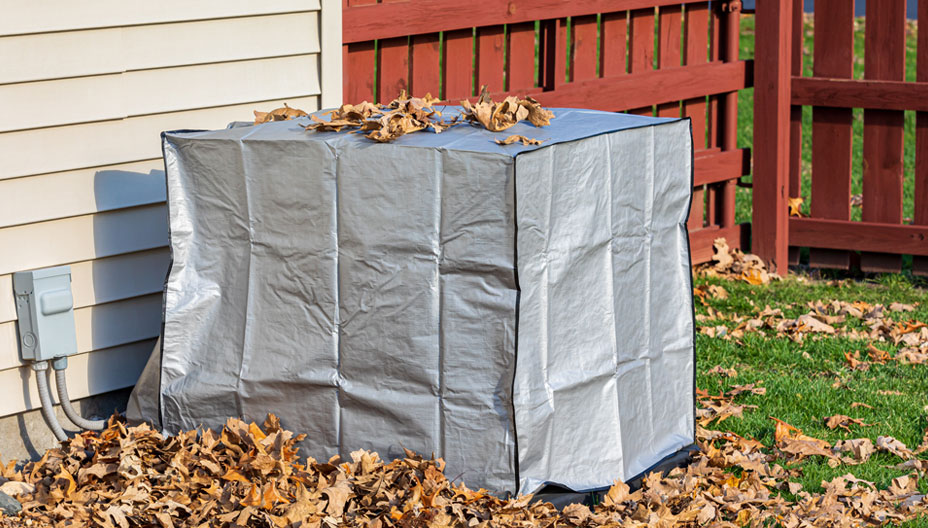
As a homeowner, spring brings cleaning and fall turns into prepping for old man winter. And just because you live in the Southeast doesn't mean you get to skip getting ready for the colder months. There's still the possibility of cold nights — and even snow or ice — so you'll want to take some simple precautions to keep your house warm and protect your pipes, home exterior and lawn equipment.
Here are seven steps you can take this fall to get your home winter ready.
1. Seal Leaks Around Windows and Doors
Windows and doors are common weak links for letting in the cold. Here's how to seal those leaks.
Windows
For windows, you can use self-adhesive foam weatherstripping on sliding or double-hung windows. Just be sure to use medium-density foam (not heavy-duty rubber). The heavier weatherstripping risks trapping too much moisture in the humid Southeast.
For leaks around non-moving parts, caulk is a great choice. Just be sure to use exterior-grade silicone caulk — not the interior type you might use for a sink or bathtub.
For more general insulation, consider investing in thermal curtains or cellular shades. Both of these will help keep the cold out in the winter — and the heat out in the summer.
Doors
The bottom of the door (at the threshold) is a common place for significant leakage. Consider installing a door sweep at the bottom of the door. It should be low enough that you can't see light from the outside but high enough that you can open the door without resistance or scraping.
For the door frame, medium-density foam weatherstripping with help seal leaks. Just make sure you can still close and lock the door. It's normal to feel a little resistance, but if it's too hard to close and lock, you'll need weatherstripping that is less thick.
2. Get Your HVAC System Serviced
You're probably used to getting your HVAC system serviced in the spring when the temperature starts to warm up. Alas, you should do it again in the winter, so you know your heat is in good working order to battle the cold. If you wait until it's cold and your heat fails, you may have wait for service.
3. Insulate Pipes
Many houses in the Southeast aren't well insulated — because they didn't need to be. The temperature rarely gets cold enough to warrant the type of insulation common in northern homes. That said, there's still the possibility your pipes could freeze — especially if there's are some exceptionally cold nights or if a power outage means your heat is out too.
The pipes most at risk of freezing are those on exterior walls (especially where hoses are attached), in basements or garages and those coming from the basement. The easiest way to insulate is with pre-slit foam pipe insulation (also called pipe insulation sleeve). You can typically find it at any hardware store or DIY big box store. You just need to know the diameter of your pipes and how many linear feet of pipe you need to cover.
One other place to think about: the water lines behind your dishwasher. These are often on uninsulated exterior walls and may freeze more quickly than other pipes since they have water running through them less frequently than other places in your house.
 The water lines behind your dishwasher may freeze more quickly than others. They're often on uninsulated exterior walls and water flows through them less frequently.
For any pipes that are hard to insulate due to size or space, consider heat tape as an alternative.1
4. Protect Outdoor Hoses and Spigots
Of all the plumbing in your house, these are the ones that are most likely to freeze given their location. But with a few simple steps, you can keep them safe all winter.
- Remove the hose and drain it well. (Water expands when it freezes, and if the hose is full when it freezes, it can burst.) Store hoses in the garage for the winter to minimize exposure to sunlight (which further degrades them).
- Turn off the water to the outside at the end of the season.
- Once the water is turned off, open the spigot to drain it completely. This minimizes the amount of water that can freeze within the pipes.
- Once the water has fully drained, the spigot off.
- Cover the spigot with Styrofoam spigot cover to further protect the pipes from the elements.
- If you own a pool, be sure to store any mobile equipment inside.
5. Invest in Basic Gear To Handle Snow and Ice
Even if sub-freezing temperatures are rare where you live, it doesn't hurt to be prepared for that fluke snow or ice storm. You're likely already prepared for a power outage in the case of a hurricane. But it's also worth having on hand: an ice scraper for your car windows (one per car), a shovel and one bag each of salt and sand.
6. Clean Gutters and Downspouts
While the weather is still nice, make sure your gutters and downspouts are all clear so water can flow freely in a big storm. If the water can't flow through the gutters and downspouts properly, you risk damaging the roof, the siding, the foundation and landscaping — while also risking getting water in the basement (if you have one).
7. Prep Gas-Powered Lawn Equipment for the Idle Season
Your house isn't the only place you need to think about winterizing. There's also your garage. When lawn equipment (like mowers and leaf blowers) sit idle, the gasoline begins to change chemically — potentially damaging various parts of your equipment.
For example, older gasoline can become "sticky" and clog the carburetor and fuel line. It can make it harder to start your equipment in the spring — or even lead to complete failure. Other chemical changes can lead to corrosion or pitting of metal parts — and cracks or leaks in rubber parts.
To prevent the problem, run your equipment until the gas runs out completely. This is a great choice for smaller gas-powered lawn equipment like walk-behind mowers, chainsaws and string trimmers. Another option is to add fuel stabilizer to a full tank of gas and run the engine for a few minutes. This is a great approach for larger engines like ride-on mowers.
Important disclosure information
This content is general in nature and does not constitute legal, tax, accounting, financial or investment advice. You are encouraged to consult with competent legal, tax, accounting, financial or investment professionals based on your specific circumstances. We do not make any warranties as to accuracy or completeness of this information, do not endorse any third-party companies, products, or services described here, and take no liability for your use of this information. Diversification does not ensure against loss.
- Aaron Stickley," What Is Heat Tape? How to Prevent Frozen Pipes," The Spruce. Updated February 27, 2024. Accessed October 15, 2025. Back
Do you have questions or ideas?
Share your thoughts about this article or suggest a topic for a new one