
Learn

- Share:
-

-

-

-


Is It a Good Time to Buy a Home?
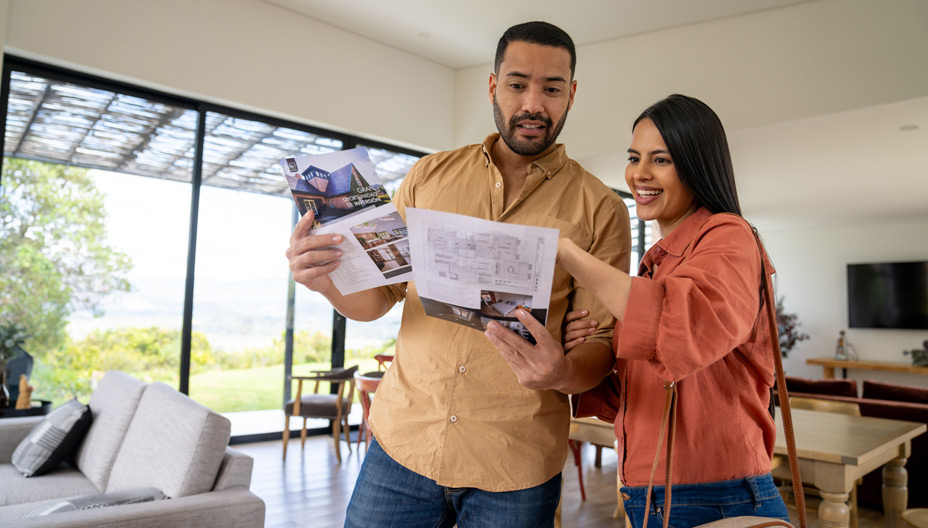
There might be some good news for those in the market to buy a home. According to Redfin News, affordability is improving. Americans need to earn $111,252 per year to afford the typical U.S. home for sale, down 4% from $115,870 a year ago.1
In 2025, there had been a wealthy renter trend being reported, meaning that even people who could afford to buy were choosing to rent instead. According to the real estate brokerage Redfin, affluent renters were becoming more common, particularly in Sun Belt cities.2 Two reasons, speculated Redfin, was that housing prices skyrocketed during the pandemic and higher interest rates drove some away from looking to buy. It made renting more attractive than buying. But, with the economic forecast improving with reduced interest rates, is renting really the better choice right now?
Renting vs. Buying When Housing Costs Are High
Renting might save you money in the short-term in today’s high-housing-cost and high-interest-rate environment but buying typically saves you more money in the long-term and is more likely to build wealth for you. Using a rent versus buy calculator, you can see how this works.
Let’s say you want to compare costs between buying a $500,000 home and renting a similar home with a $3,000 monthly rent. The calculator considers a lot of other data as well.
For instance, on the buy side, the calculator considers:
- Down payment
- Interest rate
- Loan term
- Property taxes with a possible yearly increase
- Home insurance with a possible yearly increase
- Maintenance costs
- Home value appreciation
- Selling (closing) costs
- HOA fee (if applicable)
On the rent side, the calculator considers:
- Rental fee with a possible yearly increase
- Renter’s insurance
- Security Deposit
- Upfront cost (such as an application fee)
In the above scenario, you would save money renting for 4.7 years, but at 4.8 years and beyond, you would save money by buying. In other words, if you'd like to stay where you are for around five years or more, you'd still be better off buying then renting.
Renting vs. Buying When Building Wealth
If your goal is to build wealth, you can do so as a renter by investing your money wisely. But for the vast majority of Americans, owning a home far outpaces renting for building wealth. The Urban Institute studied the wealth gap between renters and homeowners using two figures:
- The median wealth gap: the midpoint of wealth distribution.
- The average wealth gap: the total wealth of all households divided by the number of households.3
The median wealth gap is more accurate since the average wealth gap can be skewed by the very wealthy. The median wealth gap for 2022 was $390,000 in favor of homeowners. There’s been an increase of 70% in favor of homeowners over the past 33 years. During this time, the wealth of homeowners increased $165,000, and the wealth of renters increased $5,800.
 If you can afford to buy now, you might want to consider doing so, no matter what you hear or read in the news.
Much of the wealth gap is due to home appreciation, a plus for owners, and continually increasing rents (which has outpaced incomes), a minus for renters. Plus, a home can act as a sort of forced savings account that you contribute to every month.
Is Now a Good Time to Buy?
It’s good to understand the national economic climate before you buy, such as whether home prices are at historic highs and whether they are rising or falling. But when you’re buying a primary residence, your particular location often matters more than general trends. For example, it might be too expensive to buy in San Francisco or New York right now, but it might be a good time to buy in Huntsville, Alabama, or Lexington, Kentucky.4
Interest Rates
Current interest rates matter when you’re considering buying a home. The higher the rate, the more you pay each month for your mortgage payment. You can’t do much to change national interest rates, but you have some control over what your interest rate will be; your credit score plays a big role in the interest rate you’ll get. When your score is high, usually between 760 and 850, you should get the lowest possible rate.5
Note that if your interest rate is higher than you like, you might still wish to buy and refinance the mortgage loan if rates drop or if your credit score improves.
Are You Ready To Buy?
There are benefits to being a homeowner, but only if you’re ready to buy. If you can’t afford to buy a home and end up missing some mortgage payments, you could lose your home. Also, if you don’t plan on staying in the home for at least a few years, you might lose money because of the upfront costs associated with buying a home, such as closing and moving costs. Here are some ways to know if you’re ready to buy:
- Do you plan to stay in the house for at least five years?
- Do you have money set aside for home repairs and maintenance?
- Do you have money saved for a down payment? (See below for more on the down payment.)
- Can you afford to pay property taxes and homeowners insurance?
- Is your job secure? If you’re relying on two incomes, are both jobs secure? Or could you swing the mortgage and all your living expenses on one income if need be?
If you answered "yes" to all those questions, you might want to consider buying, even if renting will save you money in the short term.
Down Payment Help
If you don’t have the traditional 20% saved for a down payment, you might be able to get a conventional loan for 10% down or less. There are also government programs, such as FHA loans, where you could get a mortgage with a 3.5% down payment. VA loans and USDA loans have no down payment requirements at all.
The Bottom Line
Even though housing prices are high and interest rates, while not sky high, are higher than the historic lows of the 2.5% to 3.5% range we saw in 2021, it might still be worth it to buy at today’s prices and interest rates.
Buying a house should help you build wealth by building equity in your home versus paying rent and having nothing to show for it. But this works only if you can afford to buy under the current economic conditions and if you anticipate having enough income to continue to pay your mortgage. If you can afford to buy now, and if it makes sense for your current situation, it might not serve you to wait.
Important disclosure information
Asset allocation and diversifications do not ensure against loss. This content is general in nature and does not constitute legal, tax, accounting, financial or investment advice. You are encouraged to consult with competent legal, tax, accounting, financial or investment professionals based on your specific circumstances. We do not make any warranties as to accuracy or completeness of this information, do not endorse any third-party companies, products, or services described here, and take no liability for your use of this information.
- Dana Anderson and Grishma Bhattarai, "Affordability Is Improving, Buyers Must Earn $110,000 to Afford the Typical Home, Down 4% from Last Year," Redfin News, published February 11, 2026. Accessed February 11, 2026. Back
- Lily Katz and Elijah de la Campa, "The Rise of the Rich Renter," Redfin, published March 11, 2025. Accessed February 11, 2026. Back
- Jung Hyun Choi and Amalie Zinn, "The Wealth Gap Between Homeowners and Renters Has Reached a Historic High," Urban Institute, published April 19, 2024. Accessed May 12, 2025. Back
- Robin Rothstein, "10 Best Cities To Buy An Affordable Home in 2025," Forbes, published September 16, 2024. Accessed May 12, 2025. Back
- Molly Grace, "Compare Current Mortgage Rates," Business Insider, updated March 4, 2025. Accessed May 12, 2025. Back
Do you have questions or ideas?
Share your thoughts about this article or suggest a topic for a new one