
Learn

- Share:
-

-

-

-


How To Avoid Foreclosure
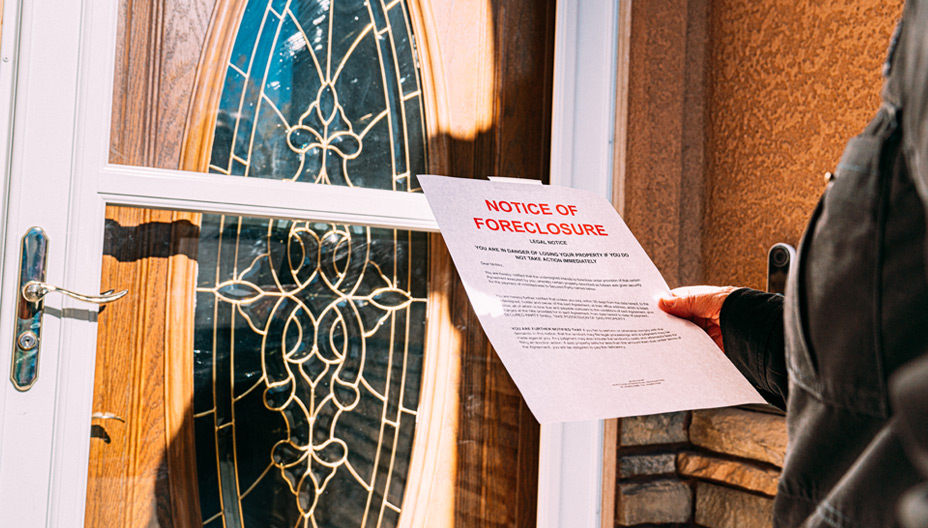
Falling behind on your mortgage can happen faster than you think and, right now, many families are facing foreclosure.
In July 2025 alone, more than 36,000 properties received foreclosure filings, a 13% increase from the previous year.1 That’s about one in every 3,939 homes nationwide.
Behind those numbers are households struggling with job losses, medical bills, or wages that can’t keep pace with inflation. The consequences are severe.
Foreclosure damages your credit for years, limits access to future loans and can even leave you without a place to live. Fortunately, foreclosure doesn’t happen overnight, and there are steps you can take to protect your home and your financial future.
How to Take Action Before It’s Too Late
The best way to avoid foreclosure is to act early and know your options. Here are practical steps to help you keep your home or avoid the most serious financial consequences.
Contact Your Lender Right Away
As soon as you think you’ll miss a payment (or if you’ve already missed one), reach out to your lender. Lenders often have programs to help borrowers experiencing financial hardship, and the sooner you let them know, the more time they have to work with you to create a plan.
Lenders typically want to help borrowers avoid foreclosure because it’s costly and time-consuming for both the lender and the borrower. They may offer options like:
- Refinance. Refinancing may make your mortgage payments more affordable by lowering your interest rate or extending your term.2 This may be an option if you haven’t yet missed any payments and have good credit.
- Forbearance. Mortgage forbearance temporarily lowers or pauses payments, though interest generally continues to accrue. You’ll need to repay the paused payments and interest after forbearance ends, at the end of the mortgage, or via higher payments over your remaining mortgage term.3
- Loan modification. A loan modification adjusts the terms of your existing loan by extending your term, lowering your rate, or reducing your principal balance to reduce monthly costs.4
- Repayment plan. A repayment plan lets you make up missed payments by spreading them over future payments.5
- Deed-in-lieu of foreclosure. A deed-in-lieu of foreclosure is an agreement to voluntarily turn over ownership of your home to your lender to avoid foreclosure. You still lose your home, and it hurts your credit. However, the impact on your credit is not as severe as a foreclosure.6
Understand Options for Specific Types of Loans
Government-backed loans — like Federal Housing Administration (FHA), Veterans Affairs (VA), or U.S. Department of Agriculture (USDA) loans — sometimes have unique foreclosure avoidance options.
For example, the FHA offers an option called a Partial Claim, where you take out a second loan and use the proceeds to bring your delinquent mortgage up to date.7 The loan is interest-free, and you pay it off when you sell the home or refinance.
No matter what kind of mortgage you have, the first step is the same: contact your loan servicer to discuss your options. You can also run quick numbers with Synovus calculators that are tailored to various mortgage services.
Consider Refinancing
Refinancing lowers your payment by resetting the term or lowering your interest rate—sometimes both. Even if interest rates stay the same or rise, refinancing can make the monthly amount more manageable.
 In addition to federal and lender-specific programs, many states offer foreclosure prevention resources that can help you keep your home.
For example, say you initially took out a $295,000 mortgage with a 5% interest rate and a 30-year term. You have 15 years of payments left, but struggle to afford them due to medical issues.
Here’s a look at how your existing mortgage might compare to financing:
|
Loan Scenario |
Remaining Balance |
Interest Rate |
Remaining Term |
Monthly Principal & Interest |
Total Interest Over Remaining Term |
|---|---|---|---|---|---|
|
Current Loan |
$200,000 |
5% |
15 years |
$1,584 |
$84,686 |
|
Refinanced Loan |
$207,000 (includes closing costs) |
6% |
30 years |
$1,241 |
$239,785 |
Refinancing would lower your monthly payment by $343, even with a higher interest rate and rolling closing costs into the new loan. That frees up more money for other essential expenses, like health care, groceries and utilities.
You’ll pay more interest over the life of the loan, but the lower monthly payment could be the difference between staying in your home and foreclosure. Plus, once you're back on your feet, you could choose to make extra payments to principle every month to shorten how long it'll take to pay off the loan — and reduce the amount of interest you'll pay over the life of the mortgage.
Qualifying for a refi depends on the type of loan you have, your credit score, your income and your employment history. Here’s an overview of the requirements for different types of mortgages, according to Experian:8
- Conventional loans typically require no payments 60-plus days late in the past year, and your loan must be current when you apply.
- FHA loans require you to be current on your loan payments for six months before your refinance application.
- VA loans allow refinancing on loans 30 or more days past due, as long as you submit your application for approval beforehand.
- USDA loans require you to be current on your payments and no late payments for a period that varies depending on the refinancing program.
Research State and Local Foreclosure Prevention Resources
In addition to federal and lender-specific programs, many states offer foreclosure prevention resources that can help you keep your home.
For example, Palm Beach County, Florida, has a SHIP Foreclosure Prevention Program.9 This program funds up to three months of payments, property taxes and homeowners' insurance for eligible homeowners. The funding comes in the form of a zero-interest second mortgage with a five-year term.10 The loan is forgiven at the end of the five-year term. You only have to repay the loan if you sell, transfer, or turn it into a rental before the five-year term is up.11
No matter where you live, check your state’s housing finance agency website and search for HUD-approved housing counseling services. These programs can help open doors to resources you didn’t know were available.
Consider Selling Your Home
If your mortgage isn’t upside down, meaning you could sell it for at least enough to cover the outstanding balance on your loan, you might consider selling the home.
Selling before foreclosure can prevent long-term damage to your credit and potentially leave you with some proceeds to restart elsewhere.
If you owe more than the home is worth, consider a short sale. In a short sale, your lender agrees to let you sell your home for less than the balance remaining on your mortgage.
It’s not as damaging to your credit as a foreclosure, and you can stay in your home during the slow sale process.12
Before short-selling your home, get your lender to agree in writing that it will waive the deficiency, meaning they won’t try to collect the difference between the sale proceeds and your mortgage balance.13
Foreclosure can feel overwhelming, but taking action early makes a big difference. You don’t have to face the process alone. Reach out to your lender, non-profit agencies, and government agencies for assistance in preserving your credit and maintaining your living situation.
Important disclosure information
This content is general in nature and does not constitute legal, tax, accounting, financial or investment advice. You are encouraged to consult with competent legal, tax, accounting, financial or investment professionals based on your specific circumstances. We do not make any warranties as to accuracy or completeness of this information, do not endorse any third-party companies, products, or services described here, and take no liability for your use of this information. Diversification does not ensure against loss.
- Megan Hunt, “Foreclosure Rates for All 50 States in July 2025,” ATTOM, published August 15, 2025. Accessed October 23, 2025. Back
- FreddieMac, “Understanding Options to Stay in Your Home,” accessed September 9, 2025. Back
- CFPB, “What Is Mortgage Forbearance?” updated October 19, 2023. Accessed October 23, 2025. Back
- CFPB, “What Is a Mortgage Loan Modification?” updated September 4, 2020. Accessed October 23, 2025. Back
- CFPB, “What Is a Repayment Plan on a Mortgage?” updated January 2, 2025. Accessed October 6, 2025. Back
- Jim Akin, “What Is a Deed In Lieu of Foreclosure?” published June 13, 2025, accessed September 9, 2025. Back
- HUD, “FHA’s Loss Mitigation Program,” accessed September 9, 2025. Back
- Tim Maxwell, “Can I Refinance if I’m Behind on Mortgage Payments?” Experian, published February 13, 2024. Accessed October 23, 2025. Back
- Palm Beach County HED, “Foreclosure Prevention Program,” accessed September 9, 2025. Back
- Palm Beach County HED, “SHIP – Foreclosure Prevention Program,” accessed September 9, 2025. Back
- Florida Housing Coalition, "Terms of Assistance," published 2022. Accessed October 23, 2025. Back
- Jim Akin, “Short Sale vs. Foreclosure: What’s the Difference?” Experian, published June 22, 2025. Accessed October 23, 2025. Back
- CFPB, “What Is a Short Sale?” updated February 2, 2024. Accessed October 23, 2025. Back
Do you have questions or ideas?
Share your thoughts about this article or suggest a topic for a new one