
How To Avoid 3 Common Travel Scams
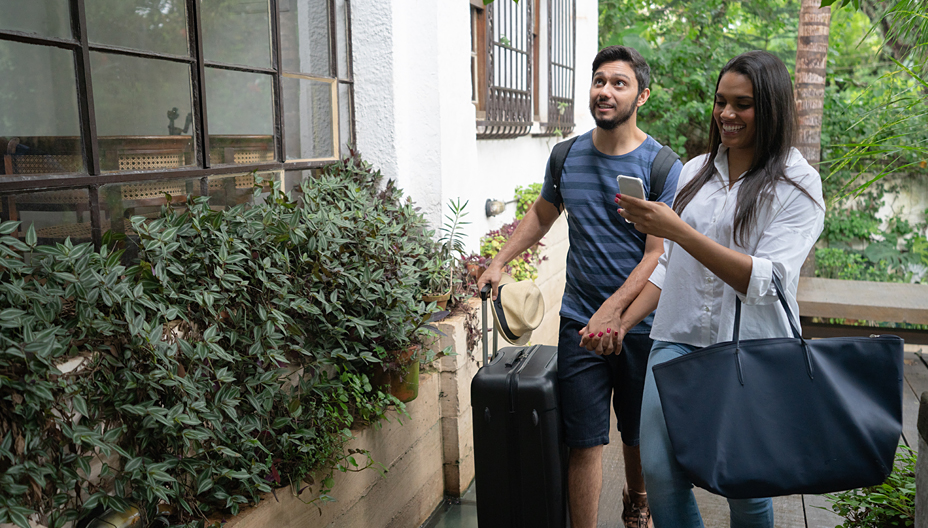
Treating all interactions with unknown people as suspicious is a cornerstone of fraud prevention. Traveling, however, is all about interacting with the unknown. Whether it's trusting that the vacation rental you booked online is real or that the QR code on an unfamiliar parking meter is a safe way to pay, tourists are extra vulnerable to fraud because, by definition, they lack a local's information and experience.
Cybercriminals are wise to this vulnerability. In 2024, travel site Booking.com said it found an increase in travel scams from 500% to 900% over the previous 18 months, thanks to AI tools that make scams easier and more effective.1
Here are some common travel scams to watch out for as you head into peak travel season this summer:
Vacation Rental Listing Scam
In 2023, a New York woman booked a two-bedroom apartment in London through a popular rental booking platform. When the supposed property owner offered her a discount by paying off-platform, she happily sent him a wire transfer of $3,100. Sadly, the listing was fake, and the money was gone.2
An Illinois woman had a more satisfying ending to her rental scam story after using Google Maps to scope out the private Central Texas home she'd rented through Airbnb.3 She didn't see the rooftop deck the listing promised, nor did the building look anything like the listing photos. She followed her instincts, requested a refund through Airbnb, and got her money back. Her curiosity prompted her to work with her local investigative news station, and they confirmed the listing was a scam.
These stories are shockingly common. A man who rents out his Myrtle Beach condo was surprised to find that someone else had listed it for rent as well.4 A large extended family lost $7,000 on a fake listing scam in 2021.5 The Better Business Bureau (BBB) ranked these vacation rental scams (along with similar timeshare scams) eighth among the top 10 reported scams in 2024, up from 10th place in 2023.6
How rental listing scams work
In a vacation rental listing scam, a fraudster posts a listing for a vacation home that doesn't belong to them on a third-party booking platform like Airbnb or Vrbo. Often, they'll simply copy and paste pictures and information from a legitimate listing on another site.
Once someone has booked the rental, the scammer will often reach out to them and offer a discount if the victim pays outside of the platform. They may even ask for an unusual payment type, like a wire transfer or Zelle. Most legitimate rental websites have fraud or cancellation protections, so this step helps the scammers get their hands on the money. Once the criminals have the payment, they typically stop all communication and disappear.
How to avoid a vacation rental scam
These tips from the BBB and Federal Trade Commission (FTC) can help you vet vacation rental listings and spot scams:6,7
- Only rent through reputable rental platforms and follow their policies. Companies like VRBO and Airbnb have fraud protections in place and typically offer refunds for unsavory behavior — but if you break their rules, like paying outside of their website, they may not.
- Research a property before renting. Search the address, name of the rental owner or company, and do a reverse image search for the property photos. Look for negative reviews or fraud complaints online. If the property is listed on another site by a different owner, that's a red flag. (Though the same owner might list their property on multiple sites.)
- Communicate and pay through the rental website only. Off-platform communications and payment requests are signs of fraudulent behavior. Never pay via untraceable methods like wire transfers, cryptocurrency, or prepaid gift cards.
- Save all documentation about your rental. Should you need to file a complaint with the rental listing company, you'll need these to support your case.
- Be wary of too-good-to-be-true prices. Legitimate renters aren't likely to offer steeply discounted rates for no reason. If the price is far lower than similar listings in the area, it could be a scam (or, at the very least, not as nice as it seems).
Toll Road Collection Texts
Utah resident Sandy Hunter recently received a text message from what appeared to be a toll road authority telling her that she owed overdue toll road fees.8 Having recently completed a road trip, she assumed she'd mismanaged an unknown toll road while traveling and clicked on the link to pay her fee. Soon after, her credit union sent her a fraud alert after large out-of-state transactions were made with her debit card.
Fraudulent texts requesting payment for toll road fees are an increasingly common phishing scam that can be particularly effective on recent travelers like Hunter, who have driven through unfamiliar road systems. During approximately one month in 2024, the FBI's Internet Crime Complaint Center (IC3) received 2,000 reports of the scam.9 The IC3 also reported toll scams as one of the top reported fraud trends of 2024, with 59,271 complaints and $129,624 in losses.
How toll road collection smishing works
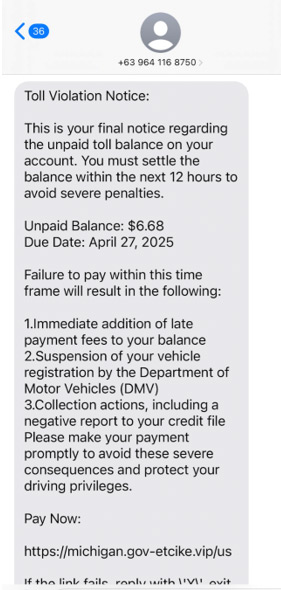
The toll road texts are a form of phishing scam, which is when a fraudster sends out emails, texts, or other messages under a false name with the aim of defrauding the receiver. When phishing happens via text message, it's called smishing. Scammers send massive numbers of these texts out, tempting recipients to pay an overdue road toll fee via a link. The link leads to a malicious website, however, that collects the user's personal information and credit card data. It could even infect the victim's device with malware, software meant to disrupt or damage a device's operation, gather sensitive information, or give someone access to your computer.
 In 2024, travel site Booking.com said it found an increase in travel scams from 500% to 900% over the previous 18 months.
While it may be particularly effective on recent travelers, some scammers target locals as well. The texts are now common enough that our fraud writer received one while writing this article. It asked for toll fees in her home state of Michigan — where no toll roads exist.
How to avoid toll road collection smishing
Knowledge is power when it comes to smishing texts. If you know this exact toll road fee scam exists, you're not likely to fall for it. But these tips will help you avoid whatever scammers' next brand of smishing scams is:
- Never click on a link in any text from an unknown sender. If you suspect the ask could be legitimate, look up the organization's website and reach out to it yourself.
- Delete and report suspicious texts with your phone's "report junk" feature.10
- File a complaint with the FBI's IC3 site. Be sue to include the phone number the text originated from and the website listed within the text.11
International Driver's Permit Scam
If you're planning to drive a car during an upcoming trip abroad, you may or may not need an international driver's permit (IDP). This isn't well known, which is something scammers are taking advantage of by using fake websites and false information to sell them a fraudulent permit.
Not only do these scams put victims' sensitive information and money at risk, but they also could expose travelers to inadvertently breaking the law in another country.12
How international driver's permit scams work
The first thing a prospective traveler is likely to do if they hear they may need an IDP abroad is to search the internet for more information. Scammers have created many fake websites that tell people they need these permits in countries where they aren't required and offer to sell them a permit online.13
These fraudulent sites not only steal the victim's money and ship them a fake permit, but the scammers may also expose or misuse their sensitive personal data. The scam could also ruin your trip if authorities in a country requiring a real international driver's permit find you driving with fraudulent papers.
How to avoid international driver's permit scams
In many (many, many) popular travel destinations, your U.S. driver's license is sufficient for legal driving during a vacation. It's best to check, however. If you plan to drive when traveling abroad, the FTC recommends these steps to avoid this scam:14
- Visit the U.S. Department of State's "Learn About Your Destination" page to search the legal driving requirements for the country you're visiting. Scroll down to "Travel and Transportation" to see if an IDP is required.15
- If your destination requires an IDP, the American Automobile Association (AAA) is the only official organization authorized by the U.S. Department of State to issue IDPs.16
- You can only apply for an official AAA IDP in person at an AAA office or by mail. All offers to apply online are scams.
Bonus tips: If you're renting a car abroad, it's smart to check both the country's and the rental car company's requirements. Some rental companies may want to see an IDP even if it's not legally required to drive in that country.17 Also, check the requirements for all countries you plan to drive through. Requirements differ as you cross borders, even across different EU countries.18
Exploring the unknown is one of travel's greatest appeals. However, staying informed enough about your destination, local laws and common travel frauds is crucial to having a great getaway. While we've covered some common travel frauds, there are certainly more. You can read about others at the State Department, BBB and FTC.19,20,21
If you believe you've fallen victim to these or any other scams, follow the steps in our article "What to Do if You Are a Victim of Fraud."-
Digital Wallets Make Paying Easy, But Are They Safe from Fraud?
Ready to leave home with a digital wallet and still keep your finances secure?
-
Live Event Ticket Scams: How to Play Strong Defense Against Event Ticket Scammers
Learn what fans need to know to stay safe from live event ticket scams.
Important disclosure information
Asset allocation and diversifications do not ensure against loss. This content is general in nature and does not constitute legal, tax, accounting, financial or investment advice. You are encouraged to consult with competent legal, tax, accounting, financial or investment professionals based on your specific circumstances. We do not make any warranties as to accuracy or completeness of this information, do not endorse any third-party companies, products, or services described here, and take no liability for your use of this information.
- Tom Gerken, "Booking.com warns of up to 900% increase in travel scams," BBC, published June 2o, 2024. Accessed May 19, 2025. Back
- Seth Kugel, "Help! My London Rental Apartment Vanished and I’m Out $3,100," The New York Times, published February 22, 2024. Accessed May 19, 2025. Back
- Jenni Lee, "An Illinois woman thought she was booking a high-end vacation rental in Austin. She almost got scammed," KVUE, published May 17, 2024. Accessed May 19, 2025. Back
- Diane Wilson, "'This could happen to anyone.' NC man stops scammers from access to his vacation rental condo," ABC 7 News, published April 27, 2023. Accessed May 19, 2025. Back
- Nina Pineda, "Family scammed out of $7K by fake listing on popular vacation rental site," Eyewitness News ABC 7, published August 7, 2021. Accessed May 19, 2025. Back
- Better Business Bureau, "BBB Scam Alert: How to spot this common vacation rental scam," published June 3, 2024. Accessed May 19, 2025. Back
- Federal Trade Commission Consumer Advice, "Rental Listing Scams," FTC, published August 2022. Accessed May 19, 2025. Back
- Kristen Tripodi, "Received a Text About Paying a Road Toll? It's A Scam," AARP, published March 5, 2025. Accessed May 19, 2025. Back
- FBI Public Service Announcement, "Smishing Scam Regarding Debt for Road Toll Services," published April 12, 2024. Accessed May 19, 2025. Back
- Andrew Rayo, "Got a text about unpaid tolls? It’s probably a scam," Federal Trade Commission Consumer Advice, published January 17, 2025. Accessed May 19, 2025. Back
- FBI Internet Crime Complaint Center, accessed May 15, 2025. Back
- KNOE Staff, "Scam alert with BBB’s Jo Ann Deal: How to not get detained in a foreign country due to a fake IDP," KNOE News 8, published July 1, 2024. Accessed May 15, 2025. Back
- International Driving Permit, "Beware: 10 Fake IDP websites to avoid," accessed May 19, 2025. Back
- Larissa Bungo, "Planning to drive in another country? Here’s how to avoid International Driver’s Permit scams," Federal Trade Commission Consumer Advice, published June 24, 2024. Accessed May 19, 2025. Back
- Travel.State.Gov "Learn About Your Destination," U.S. Department of State, accessed May 15, 2025. Back
- AAA, "International Driving Permit," accessed May 19, 2025. Back
- Progressive, "How does international car rental work?" accessed May 19, 2025. Back
- Rick Steves, "Rental-Car Red Tape in Europe," accessed May 19, 2025. Back
- Travel.State.Gov, "Protecting Yourself from Scams," U.S. Department of State, published February 5, 2025. Accessed May 19, 2025. Back
- Better Business Bureau, "Top 5 vacation scams to watch for when making travel plans," accessed May 19, 2025. Back
- Federal Trade Commission Consumer Advice, "Avoid Scams When You Travel," FTC, published December 2022. Accessed May 19, 2025. Back